What Is Experience Management (XM)? A Complete Guide for Modern Businesses
Customers remember experiences more than products. Employees remember experiences more than policies.
In today's competitive market, businesses that understand and improve experiences grow faster, retain customers longer, and build stronger brands. This is where Experience Management (XM) comes in.
At Intunix, we believe experiences are one of the most valuable assets a business can manage.
What Is Experience Management (XM)?
Experience Management (XM) is the process of collecting, analyzing, and improving feedback from customers, employees, and other stakeholders to create better experiences and drive business growth.
XM helps organizations answer questions like:
- How satisfied are our customers?
- Why are customers leaving?
- What frustrates employees?
- Which experiences drive loyalty?
- What should we improve next?
Instead of relying on assumptions, Experience Management enables organizations to make decisions based on real feedback and behavioral insights.
Why Experience Matters More Than Ever
People no longer choose businesses based only on price or features.
They choose brands that provide:
- Fast and helpful support
- Smooth digital experiences
- Personalized interactions
- Consistent service quality
- Trust and transparency
A poor experience can quickly lead to:
- Customer churn
- Negative reviews
- Lower revenue
- Reduced employee engagement
- Brand damage
On the other hand, great experiences create loyal customers and long-term growth.
The Four Core Areas of Experience Management
1. Customer Experience (CX)
Customer Experience focuses on understanding how customers interact with your business.
Organizations collect feedback through:
- Surveys
- NPS (Net Promoter Score)
- CSAT (Customer Satisfaction)
- CES (Customer Effort Score)
- Website feedback forms
- In-app feedback
The goal is to identify pain points and improve the customer journey.
2. Employee Experience (EX)
Happy employees create better customer experiences.
Employee Experience programs help organizations measure:
- Employee satisfaction
- Engagement levels
- Workplace culture
- Onboarding experiences
- Retention risks
Listening to employees leads to stronger teams and better performance.
3. Research and Insights
Experience data provides valuable insights for:
- Product development
- Market research
- User testing
- Brand perception analysis
- Customer behavior understanding
Businesses can validate decisions with real feedback instead of guesswork.
4. Reputation Experience Management (RXM)
Modern experience management extends beyond surveys.
Customers also express opinions through:
- Online reviews
- Social platforms
- Public ratings
- Word of mouth
Reputation Experience Management connects solicited feedback with public reputation to create a complete view of customer sentiment.
How Experience Management Works
A typical XM process looks like this:
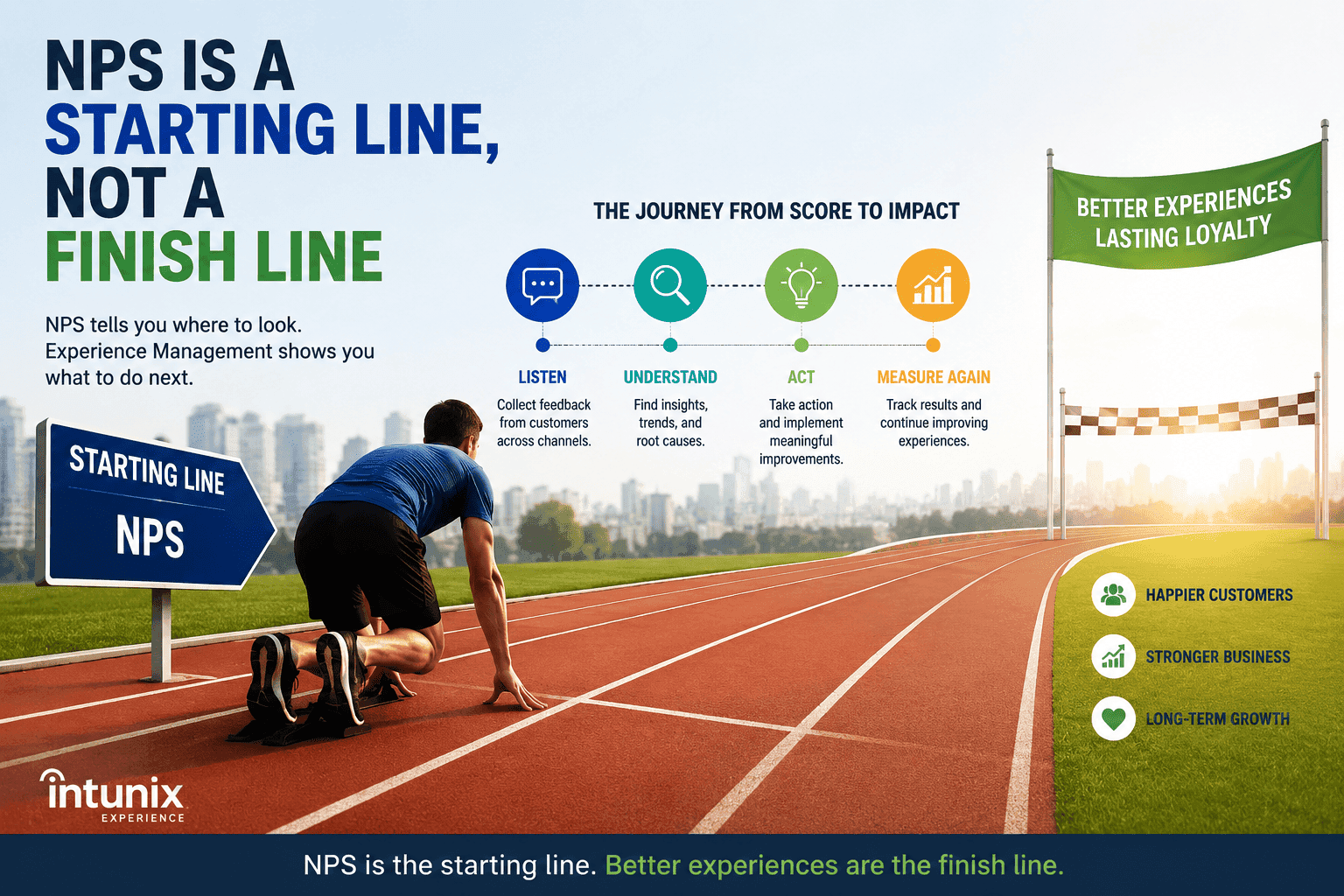
1. Collect Feedback
Gather responses from customers, employees, or users through multiple channels.
2. Analyze Data
Identify trends, satisfaction levels, and pain points.
3. Generate Insights
Understand why experiences are improving or declining.
4. Take Action
Implement improvements based on feedback.
5. Measure Again
Continuously monitor results and optimize experiences.
Experience Management is not a one-time project. It is an ongoing cycle of listening and improvement.
Common Experience Metrics
Organizations commonly track:
Net Promoter Score (NPS)
Measures customer loyalty by asking:
"How likely are you to recommend our company to others?"
Customer Satisfaction (CSAT)
Measures how satisfied customers are with a specific interaction.
Customer Effort Score (CES)
Measures how easy it was for customers to complete a task.
Employee Engagement Score
Measures employee motivation and workplace satisfaction.
Benefits of Experience Management
Companies that invest in XM often experience:
Higher Customer Retention
Satisfied customers stay longer and spend more.
Better Employee Engagement
Employees feel heard and valued.
Faster Decision Making
Feedback provides clear direction for improvements.
Increased Revenue
Better experiences often lead to stronger business results.
Stronger Brand Reputation
Positive experiences generate trust and advocacy.
Industries Using Experience Management
Experience Management is used across many industries, including:
- SaaS and technology companies
- Retail and eCommerce
- Healthcare organizations
- Educational institutions
- Financial services
- Hospitality businesses
- Telecommunications companies
- Government and public services
Any organization that serves people can benefit from XM.
The Future of Experience Management
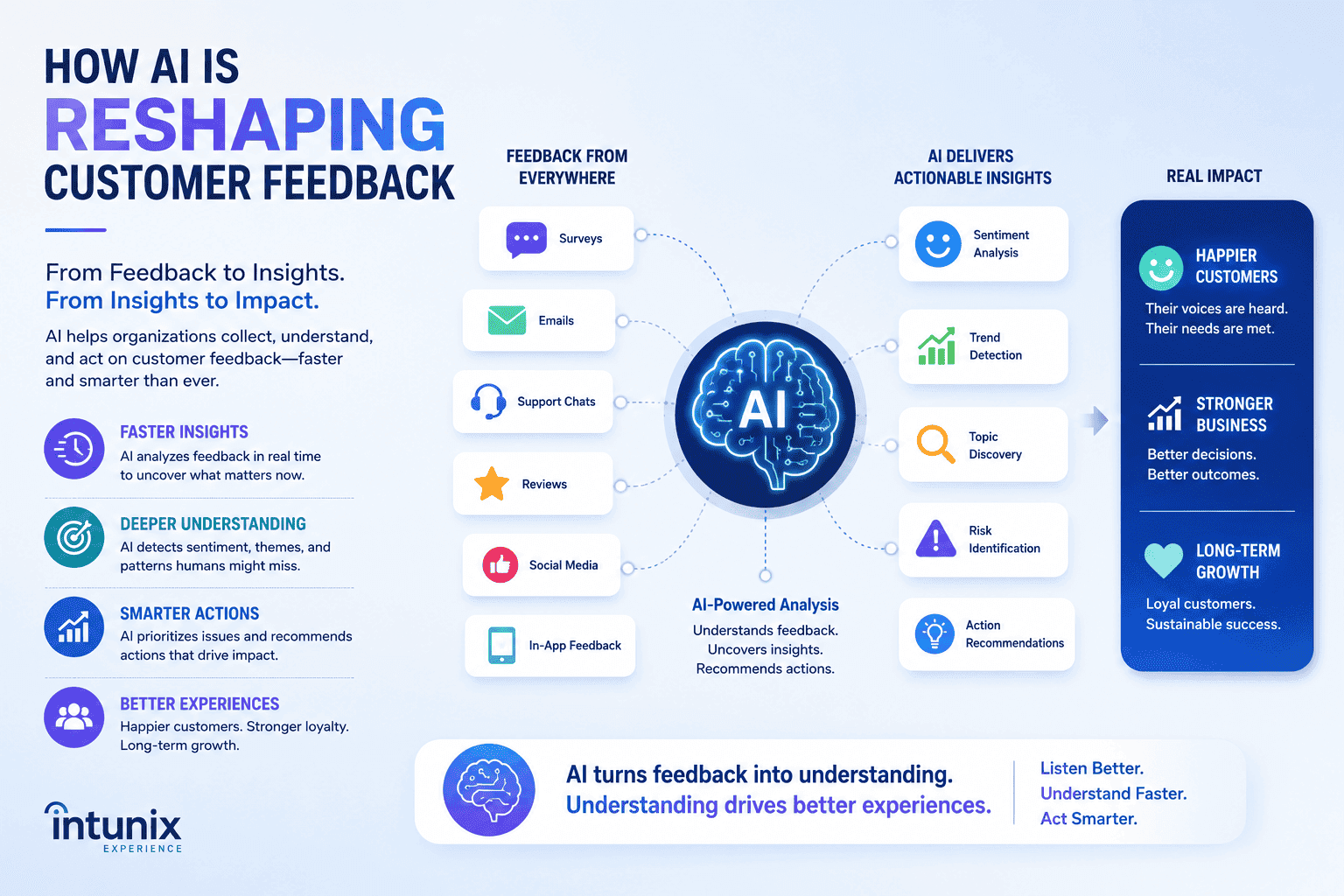
Experience Management is rapidly evolving with AI.
Modern XM platforms now provide:
- AI-powered insights
- Automated workflows
- Predictive analytics
- Real-time dashboards
- Multi-channel feedback collection
- Sentiment analysis
The future of business belongs to organizations that can listen, understand, and act faster.
Experience Management with Intunix
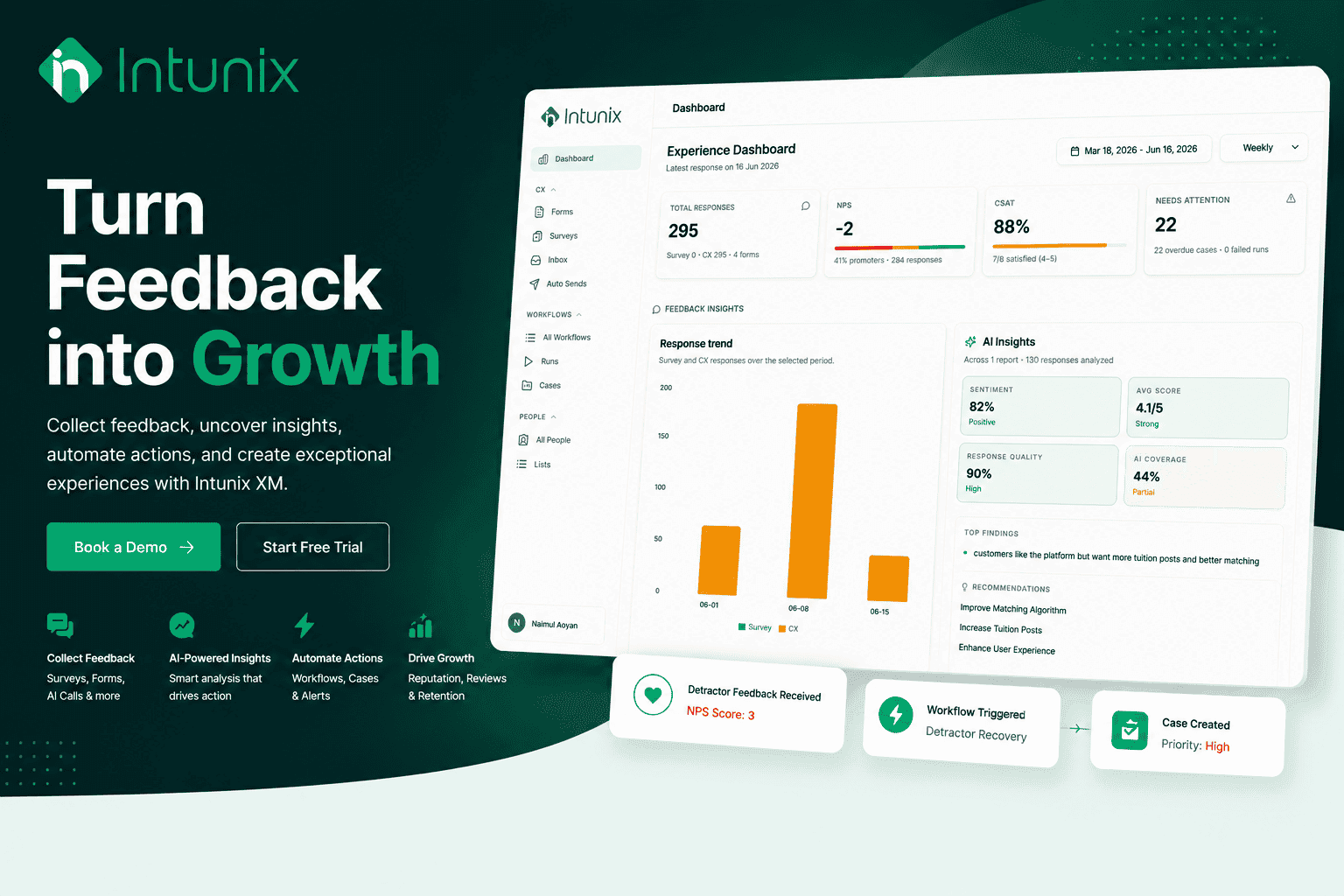
Intunix Experience helps organizations transform feedback into growth.
With Intunix, businesses can:
- Create surveys and feedback forms
- Measure customer and employee experiences
- Track NPS, CSAT, and other metrics
- Automate feedback workflows
- Generate AI-powered insights
- Turn feedback into actionable improvements
Our mission is simple:
Turn Feedback Into Growth.
Final Thoughts
Experience Management is no longer optional.
In a world where experiences define brands, organizations that actively listen and act on feedback gain a significant competitive advantage.
The businesses that win tomorrow are the ones that understand people today.
Ready to improve your customer and employee experiences?
Discover how Intunix Experience can help your organization turn feedback into growth.
.png&w=1920&q=75)